It is a beautiful thing that the Higher Power, through happenings and events, consistently reminds the world that dangers are increasing daily. Indeed, thinkers keep saying that education must produce problem-solvers as life becomes more complex.
Among other reasons, problem-solving must have the key consideration when Kenya reformed its education to match competence instead of producing graduates who don’t appreciate their environments and the disruption speed.
Indeed, solving problems hinges on character as opposed to accumulation of academic certificates that are coated with good grades from pre-school to university.
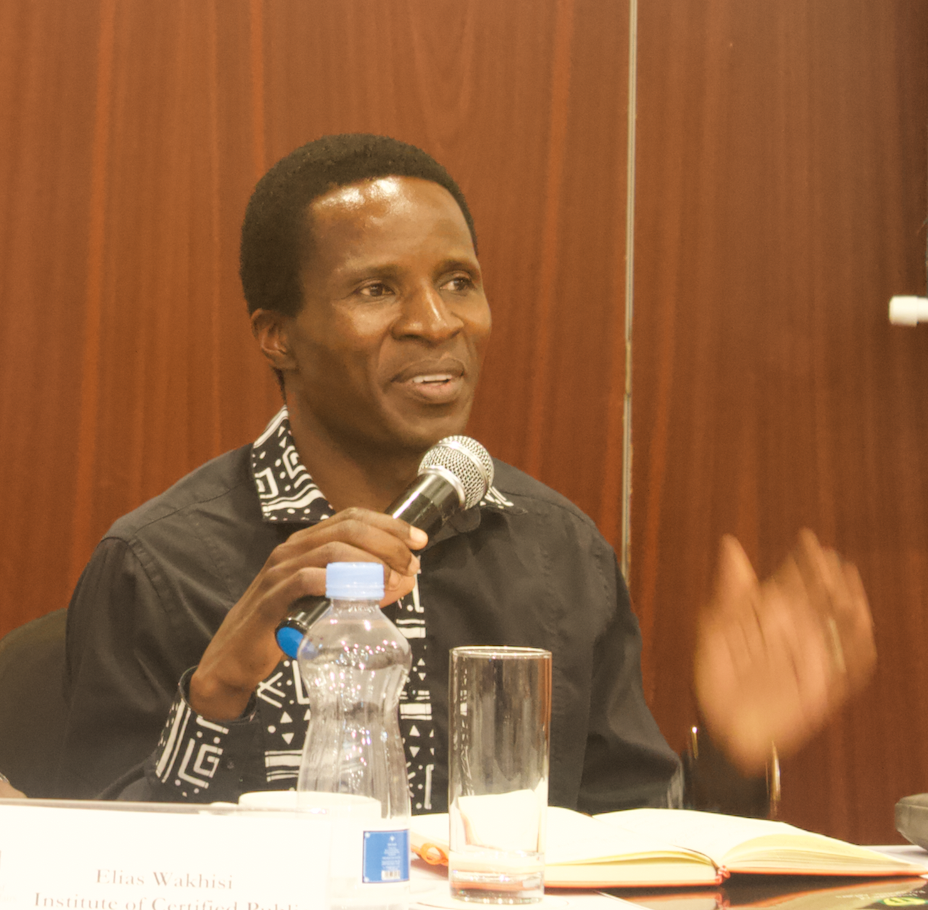
At the just-ended Kenya Comprehensive Schools Headteachers Association meeting on the Coast, Dr Emmanuel Manyasa, a development economist and education researcher who heads Usawa Agenda, reminded teachers that literacy and numeracy alone were not enough.
“As human beings, we live in dangerous times…in the sense that people have focused on sharpening their minds so much without sharpening their humanity,” Dr Manyasa said.
“So, schools must stop being places where children just learn literacy and numeracy but become places that are formation centres that enable us to create character in those children,” he told the headteachers at the annual convention.
Two points: formation centres and creation of character. Formation and creation require effort and a lot of work. And, stepping into “creation of character” should even be more challenging in effort to come up with what the Usawa Agenda official called ‘schools of the future’.
He told the conference that school leaders ought to rethink the purpose and role of the learning centres in shaping society.
Schools, he explained, must go past offering literacy and numeracy skills—most cases tied to rote learning— alone and become institutions that build responsible individuals, firm up human values and prepare the learners to meaningfully build the nation.
According to him, there is an urgent need for safer learning environments, demonstrable community involvement and “stronger” school structures that deliver effective teaching and learning. Learning that is measurable.
“Re-imagining the school of the future requires us to look beyond what children learn to consider the individuals and citizens our schools help shape,” he said.
He was speaking just when President William Ruto had told the same gathering to ensure schools were producing literate learners who were able to read their books and their environments.
Dr Ruto asked the teachers to ensure that by 2030 schools should ensure that by the end of Grade 3, every learner can read, write, and count. On this, Kenya has registered improvement. Unfortunately, the reading and writing has not enabled Kenyan graduates to be in charge of their selves and the entire economy.
Recently, Anthony Muchiri, who was chairman of the Public Service Commission, shocked the country when he faulted PhD holders “with empty heads” while their academic papers show they are genuinely learned. In other forums, such people are accused of being half-baked despite taking years in school.
And, now President Ruto has said the government “will measure progress every year, and we will publish the results, county by county and school by school so that every parent can see how far we have come.”
The President cited, among other data, Usawa Agenda’s FLANA Report 2026 that found that less than three in 10 learners in Grade 4 could read and understand Grade 3 story and numeracy question.
According to the President, Grades 1-3 should be marked as priority learning years that should get the attention of the best teachers.
He asked the Ministry of Education, the Teachers Service Commission and the Kenya National Examinations Council to come up with tools for monitoring learner progress.
According to a survey by A Plain across schools, some Grade 6 learners can neither read nor write Grade 3 work.
Indeed, some Grade 3 learners cannot write their own names, meaning they were passing through the school bridge with limited literacy, something that requires urgent intervention.
Immediately after the President issued the directive, some teachers asked the government to revamp training, pay them well, provide adequate resources, employ more teachers, and reduce the size of classes.
But these points, including those the President presented, are not new. What is required is action, especially meaningful monitoring of teaching to deliver quality.
This is how to produce schools of the future whose graduates are people of character who work diligently to produce a less dangerous world.