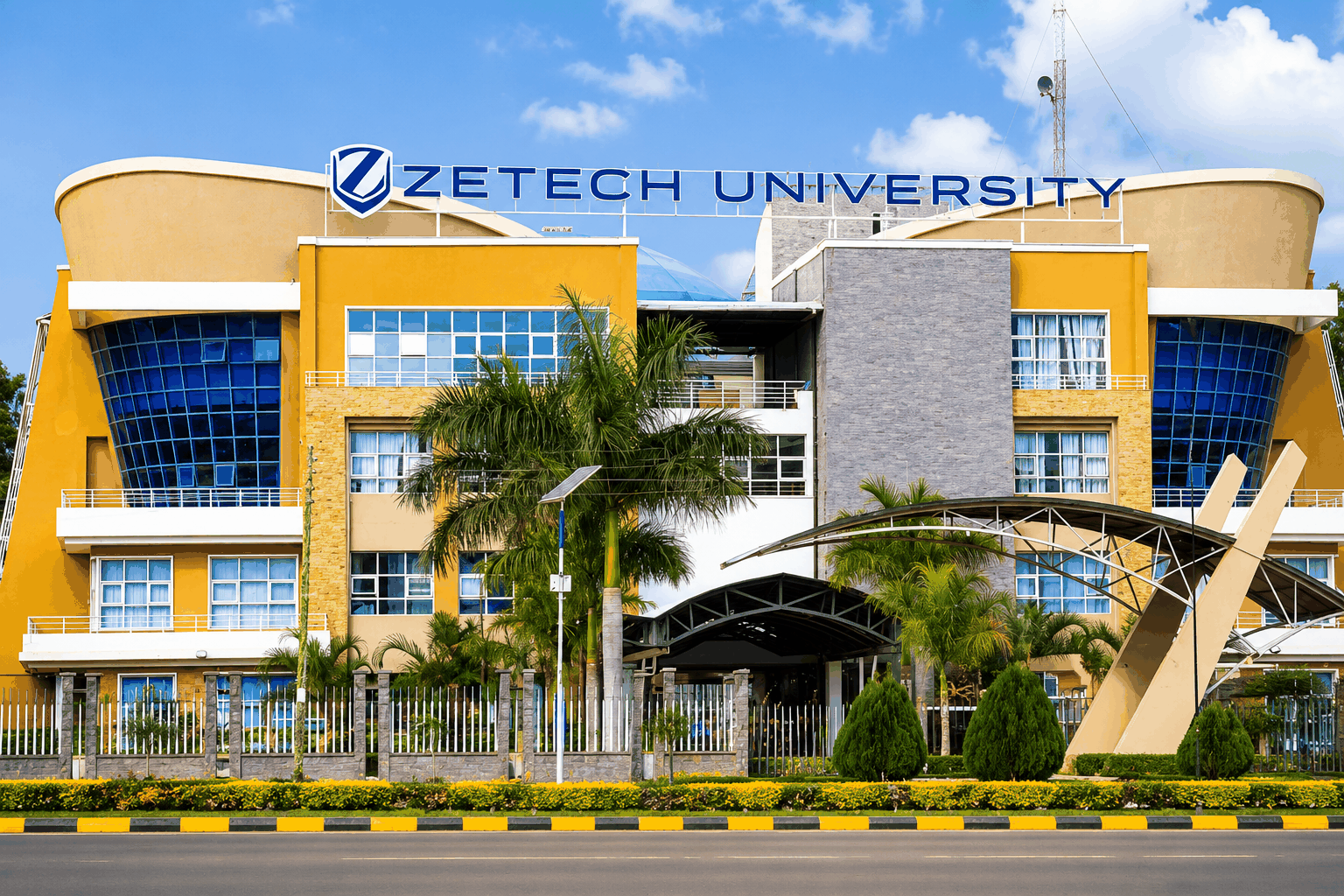
Kenya’s Zetech University is set to establish a digital archive on maritime and inland-water safety heritage through a grant by a UK organisation.
The Kenyan institution is one of the universities and organisations spread across Africa, Asia Pacific and Europe that will be assessing the subject under various themes in a £2.5 million (about Sh425 million) grant issued by Lloyd’s Register Foundation.
Through a research project, Zetech will start building the archive before the end of 2026 in what the university praised as its contribution to safer and more sustainable communities. The Foundation, which is a product of Lloyd’s Register Group, with a focus on safety is funding a total of six projects run by single entities or through partnerships.
The Zetech research dubbed ‘Remembering the Waters’, will document ferry disasters, boat accidents, near-misses, and safety experiences from coastal and Lake Victoria communities.
“It will gather oral histories, records, images and safety insights, develop an open digital archive, train communities and partners in documentation, and share learning through policy briefs, exhibitions and public engagement and awareness activities,” Lloyd’s said on its website.
The project is expected to preserve community knowledge, inform policy, strengthen safety, awareness, and shape future maritime safety practices, the university said.
The Foundation says data collected from the six projects will help people to better understand the safety challenges of transitions in the ocean economy.
It has spread the project across three themes, namely safety, covering shipwrecks, maritime disasters and success; equity and transparency (on contested histories, forgotten voices, and hidden figures); and, transitions, looking at ships, ports, and technological advancement.
While Zetech will be working on ‘Remembering the Waters’ on maritime safety heritage, Tyndall Manchester, Micronesian Centre for Sustainable Transport, Melbourne Climate Futures and International Windship Association are working on ‘Pacific Winds of Change’ that will document sailing knowledge, assess priority routes and identify crew training.
Ghana’s Regional Maritime University is building a repository centre of excellence on shipwrecks and maritime disasters to assess safety advancement, sustainability and heritage.
“Working with partners in Ghana, Nigeria and Tanzania, it will digitise and harmonise museum, archival, regulatory, academic and community data,” Lloyd’s said, listing expected outputs as open-access digital repository, GIS dashboard, hazardous wreck mapping, policy briefs, peer-reviewed publications, and oral-history documentation to support environmental monitoring and heritage preservation.
Working on ‘Hidden Hands of Shipbuilding,’ University of the West of Scotland, seeks to uncover, preserve and celebrate the hidden voices and untold histories of two shipbuilding regions that helped shape global maritime engineering, Gdańsk in Poland and Clydeside in Scotland.
‘Hidden Hands’ is a partnership involving the University of the West of Scotland, European Solidarity Centre, Scottish Maritime Museum, NOMUS, Instytut Kultury, Miejskiej, and Arteria Association.
The research will focus on hazardous working conditions, disappearing skills, solidarity and women’s labour.
Hongkong Maritime Museum will build a centre to capture under-documented maritime voices from maritime communities, including seafarers, fishermen, boat families, shipyard workers, regulators and unions. It will use safety-focused oral histories, create a bilingual digital archive, publish a replicable methodology toolkit, and run seminars and workshops.
Malaurie Institute of Arctic Research based in France is undertaking to assess 300 years of “hidden history” by reviewing indigenous industry knowledge.
Lloyd’s says the study will focus on safe navigation routes, sea ice, environmental change, hunting practices and maritime accidents by analysing “historical handwritten sources using AI-assisted transcription and GIS mapping”.
The study is being rolled out at a critical time in history, partly with the technological disruptions, climate woes, and global trade challenges that increasingly require continual research as global economies battle fierce winds requiring top talent to navigate.