
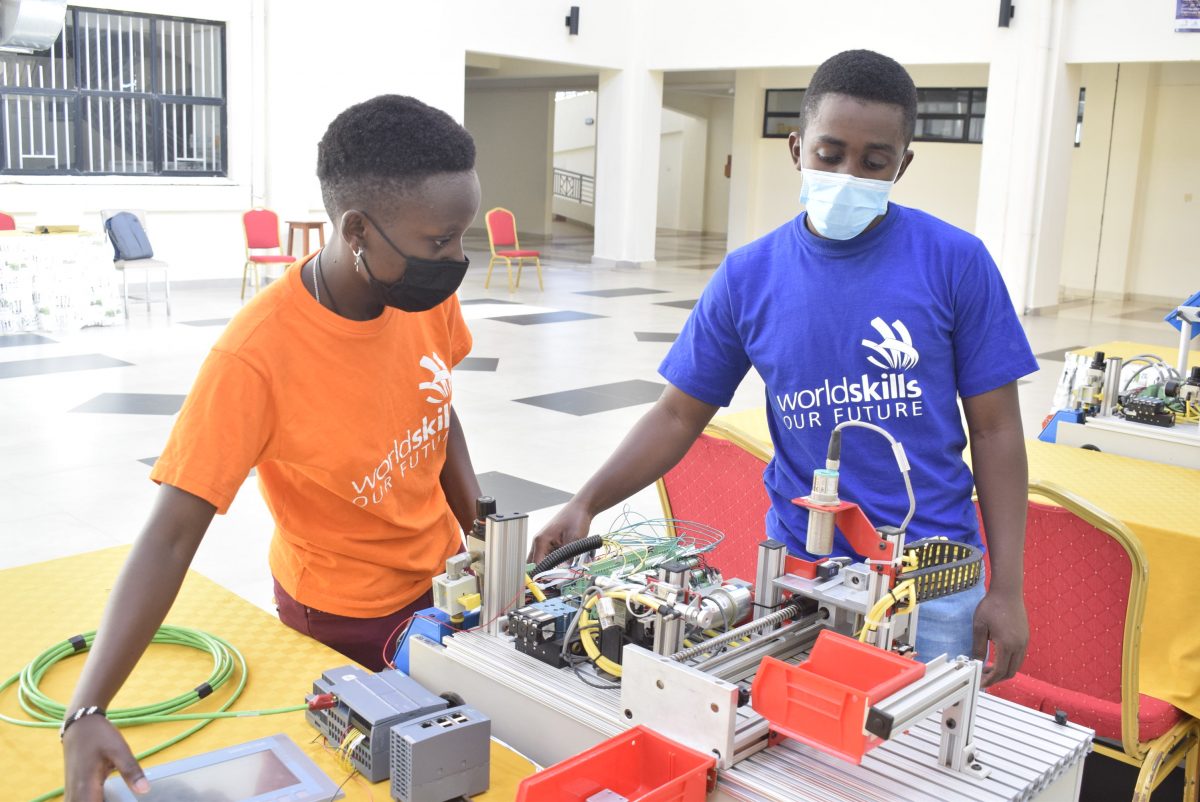
A few years ago, Kenya had a laughable three oil pipeline welders. THREE. Not 30! It took the intervention of development agencies to send Kenyans to schools abroad to specialise in this area.
At a time people and economies that know better are paying top dollar to acquire top skills, it is painful that Technical, Vocational Education Training (TVET) institutions can declare 308,339 vacancies and get a paltry 44 percent placement. Of these, only 137,072 applied and were placed. Where are the rest?
Increasingly, organisations that deliver innovation after innovation are talking about degreeless skills repository in the race for top global assignments. This is the time Kenya must work harder to produce dependable technicians and technologists whose skills can be exported even if there were no vacancies locally.
Why are Kenyans leaving money on the table by ignoring TVET training? We live in a world of endless negotiations! Why is the government not thinking outside the box when close to 200,000 youth give higher learning a wide berth? It is a case of insecurity.
Why should Kenya spend billions of shillings on “free and compulsory” basic education and ignore technical skills training or treat it this casually?
It is sad that while 134,690 Kenya Certificate of Secondary Education (KCPE) exam candidates who scored the university entry grade of C+ and above were placed, a whopping 7,850 didn’t bother to apply at all.
It is highly unlikely that homes of privilege may have flown this big number of their children to foreign universities.
Perhaps, it is high time the government ran a survey to tell the country where this big number went to in terms of furthering their education when there is a general feeling that university education was losing its lustre.
While it is unsightly, the 7,000 youth and their families that said No to Kenyan universities is a smaller evil compared to the 170,000+ who did not see the value in applying for certificate and diploma courses to become leather technicians, masons, lab technologists, drainage engineers, land and quantity surveyors, plumbers, graphic designers –name it.
How will they earn? How will Kenya grow? It is mind-boggling that this was happening at a time the Kenyan government was going big on mega infrastructure projects. For how long shall the economy rely on Europeans, Japanese and the ubiquitous Chinese to design and build roads, skyscrapers, and bridges?
The government already made a bold attempt at increasing TVET enrolment by, among other things, budgeting for a Sh30,000 capitation for college students who are also eligible for the Higher Education Loans Board (HELB) funding.
When the government fires on all cylinders to ensure Kenya is saturated with dependable technical skills, it does not augur well that 171,067 chances go unfilled when the State is pushing for 100percent transition to secondary school.
It does not make sense to see more than half of the declared vacancies going down the drain when Kenya’s first technical training blueprint is soon rolling off the press.
With this kind of wastage, the Ministry of Education must reassess the career guidance in schools. How informed are teachers in matters career when of the 10,437 KCSE exam centres, only 2,506 submitted course applications to the Kenya Universities and Colleges Central Placement Service (KUCCPS)?
When a paltry 24percent of the exam centres submit applications, the Ministry of Education has known where the leak is coming from. It must be fixed urgently.


