
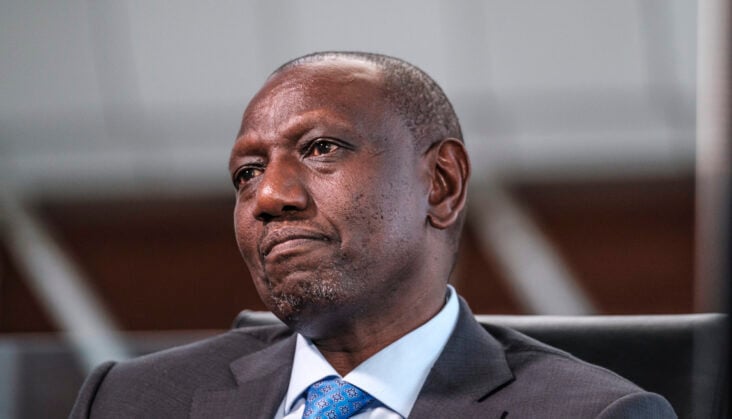
A career civil servant, Mr Ezekiel Machogu has been nominated to head the all-important Ministry of Education in the government of President William Ruto. Should he pass the parliamentary vetting, as is expected, Machogu will be inheriting a docket that requires not only stamina, but a rare thinking outside the box.
Among the ministries, it is a country’s education that determines progress more than anything else; not even the all-powerful Finance and Planning. So, a good Education minister must come up with programmes that the budgeting ministry finds irresistible.
Machogu will require a rare stamina because the two men ahead of him at the ministry had larger-than-life profiles, based on their past, modes of operation, and delivery.
Since 2015 when Dr Fred Matiang’I, a former lecturer, joined the ministry and confronted the menace of cheating in national examinations, education in Kenya has grown in stature and profile.
Under Dr Matiang’i, the management of the Kenya Certificate of Secondary Education (KCSE) was ruthless, leading to markedly different result tallies. Notable was the reduced number of A-plain scores that fell to less than 150 across the nation.
Previously, a single school could score upto more than 200 As, the strongest evidence that the management of this crucial examination had gaps that unscrupulous schools, civil servants, teachers, parents and learners exploited to cheat.
Matiang’i also ended the long waiting for examination results from about two months to less than two weeks, leaving observers and pundits asking what really happened between the end of November when the examinations were completed and release close to March.
Sadly, the abnormal KCSE exam.”stellar” scores are back and observers are wondering whether schools were having a field day cheating while the ministry mandarins were having sleepless nights thinking the papers were secure and exams credible.
Amina Mohamed, Kenya’s diplomacy freak, replaced Matiang’I but her run was uneventful until Prof George Magoha came in at this crucial ministry. Magoha, a former University of Nairobi vice-chancellor, did a fair job at the ministry and was visible, continuing the war against exam cheating.
Despite his gusto, though, and insisting that the exams were credible, the tally of the scores required a more indepth analysis to test whether the cheating machinery had returned or students were benefiting from the endless drilling for the exams that has seen schools demand extra payments for “remedial” teaching.
Every term, schools are charging parents between Sh2,000 and Sh5,000 for the extra teaching classes that are attended by everyone, including top-grade scorers who don’t require any remedials.
Magoha also launched the competence-based curriculum (CBC) that the government says will be the game-changer in terms of producing top skills for the modern global economy.
Opinion is still divided about the successful implementation of CBC that envisages taking career paths based on ability, not general academic performance laced with cramming and tortuous learning.
President William Ruto, himself a former minister for Higher Education, is working on a task force to review the implementation of the competence-leaning schooling that some parents have complained is expensive and demanding in terms of costs and guiding the learners at home.
Machogu, a Bachelor of Arts graduate who stayed in the civil service for 27 years joining as a district officer and rising to the position of senior deputy secretary, will require an innovative mind to ensure some of these challenges are addressed.
At universities, he will need a more than average design and execution to ensure these institutions are well funded, lecturers are competitively recruited and paid on time, and the students are learning in secure environments.
However more importantly, universities mean little without a proper research funding in line with the global standards tied to a country’s production — the gross domestic product.
Because research is poorly funded, lecturers in Kenya have resorted to running consultancies at the expense of quality teaching and useful research that would grow university earnings and stature while expanding the economy through more engaging products that create the much needed jobs.
Related to funding is the support through the Higher Education Loans Board (HELB) whose funding arteries were not only on and off but were constricted to near death. Today, its releasing of the loans is not regular, leaving families and students smarting.
HELB must be restructured to function as optimally as possible, especially turning its programmes into dependable funding formulas that give those who seek support hope and energy to study and grow the economy.


