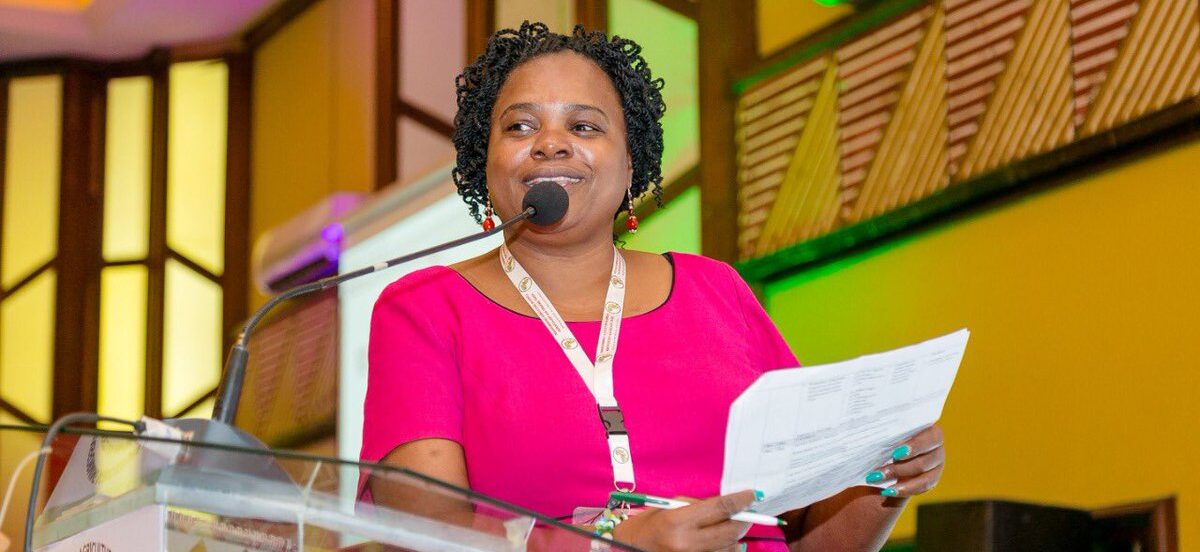
Veteran communication expert Sylvia Mwichuli has become the first chief executive of the Public Relations Society of Kenya (PRSK) at a time the lobby is struggling to get an Act of Parliament recognition.
Ms Mwichuli boasts senior management roles that must have convinced the head-hunters to honour her with the job that will demand working round the clock to place the little-known society on the scales of other professional lobbies in Kenya.
With more than two decades on the job, the PRSK president Wilfred Marube said the new CEO is an “accomplished and dynamic” professional who had done well in strategic communication, leadership, policy development, and advocacy, an experience that reveals a “strong track record in business growth and improving general organisational growth.”
A University of Nairobi trained journalist, she worked at the Nairobi-based Alliance for a Green Revolution in Africa (AGRA) once headed by the late Kofi Annan, UN Millennium campaign by the UNDP, Amref Kenya, ActionAid Kenya, and a council member at the PRSK.
Ms Mwichuli has an Executive MBA from the Jomo Kenyatta University of Agriculture and Technology, a postgrad diploma in mass communication from the University of Nairobi and an education degree from Moi University. She also holds a diploma in Women in Journalism from a Swedish University.
“The Council is confident that Ms Mwichuli’s breadth of experience and track record align perfectly with PRSK’s strategic direction as we continue to grow as the center for excellence in Public Relations,” said Dr Marube in a statement announcing the appointment.
Although the lobby’s Council is in charge of pushing for the publishing of a PR Bill that will give it the much needed legal foundation, this is one task that will give the new CEO sleepless nights to see the society on a firmer professional pedestal.
Were the PRSK to get this legal backing, it will be in the league of other professional societies like the Law Society of Kenya (LSK) whose president is Nelson Havi.
Other well-known professional societies in Kenya are the Institute of Certified Public Accountants of Kenya (ICPAK), Institute of Certified Public Secretaries of Kenya, Institution of Surveyors of Kenya, Kenya Medical Association, Kenya Medical Practitioners and Dentists Board, and the Institute of Human Resource Management.
The Institute of Engineers of Kenya, the Media Council of Kenya, Kenya Institute of Supplies Management, the Marketing Society of Kenya, the Architectural Association of Kenya, the Nursing Council of Kenya, and the Board of Registration of Architects and Quantity Surveyors of Kenya also make the list.
A number of employers are increasingly demanding membership of professional bodies since these societies also double as regulators and trainers in their own rights, helping to restrict practitioners to the straight and narrow on governance codes.
Every year, the Auditor General flags billions of shillings going down the drain and State assets atrophying under the noses of professionals who are accused of looking the other way, lacking capacity or colluding with looters to inflict pain on the struggle taxpayer.
According to the Kenya National Qualifications Authority, there are 27 professional bodies and associations in the country, some with the legal backing while others are “loose associations” representing hundreds of professionals.