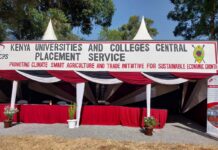
Pwani University will host Kenya’s celebrations of this year’s International Mother Language Day that is marked every February 21.
This year’s theme is ‘Multilingual Education – a necessity to transform education”. At Pwani University, the sub-theme will be ‘Mother Language and Formal Education in Africa: Problems and Prospects, Hopes and Impediments’.
As the world celebrates, Unesco has asked countries to put emphasis on using mother-tongue in the early years of schooling, saying children who are taught in a language they speak at home are “30 percent more likely to read with understanding by the end of primary school than those who do not speak the language of instruction”.
“To help fight the current global learning crisis, while preserving the linguistic diversity which is an essential cultural element, Unesco urges governments to embrace multilingual education based on the mother tongue from the earliest years of schooling. We know it works – there is empirical evidence to prove it helps children learn,” says Audrey Azoulay, the Unesco director-general.
The Unesco is making the call when Kenya is implementing a competence-based curriculum (CBC) that is designed to pave the way for learners based on ability, be it the arts or STEM, the latter focusing on science, technology, engineering and mathematics.
Ahead of the fete, Unesco has asked the international community to support Africa in their actions to develop multilingual learning, the instruction in mother tongue that is interspersed with official languages.
It is expected that if Kenya used the mother language more in the early years of schooling, the pupils would more easily than otherwise understand and identify their competences and talents early as they prepare to launch their careers.
At the Pwani University celebrations on Tuesday, researchers in language, linguistics, and cultural studies from universities and other organisations, broadcasters, anthropologists, historians, and critics are expected to light up the day.
A new talent centre in Homa Bay County — Ramrod Ujuzi Centre — has warned that Kenya was losing a lot of wealth in “talent haemorrhage”.
“Everyone is endowed with a God-given talent and we are launching this centre concerned that there is a lot of talent haemorrhage. This kind of bleeding should be corrected as early as when a child is able to read, write and sing the rhyme, ‘When I grow Up,” Mr Ochieng’ Oreyo, the chairman of Ramrod Ujuzi Centre said during the launch on February 10.
Kenya is thriving in vernacular broadcasts led by a strong stable presented by Royal Media Services owned by SK Macharia.
Not less than 40 percent of the more than 6,700 languages spoken around the world, the Unesco says, risk being wiped out in the long term due to a lack of speakers.
Hundreds of languages are threatened globally and in Kenya the Suba, Ogiek, Omotik, Terik, El Molo, Bong’om, Sogoo, and Yaaku languages are believed to face the threat of extinction.
Among other efforts, the Unesco is leading the Indigenous Languages Decade 2022-2032, a 10-year push to draw attention to the threats to indigenous languages and how they can be salvaged and revamped.