
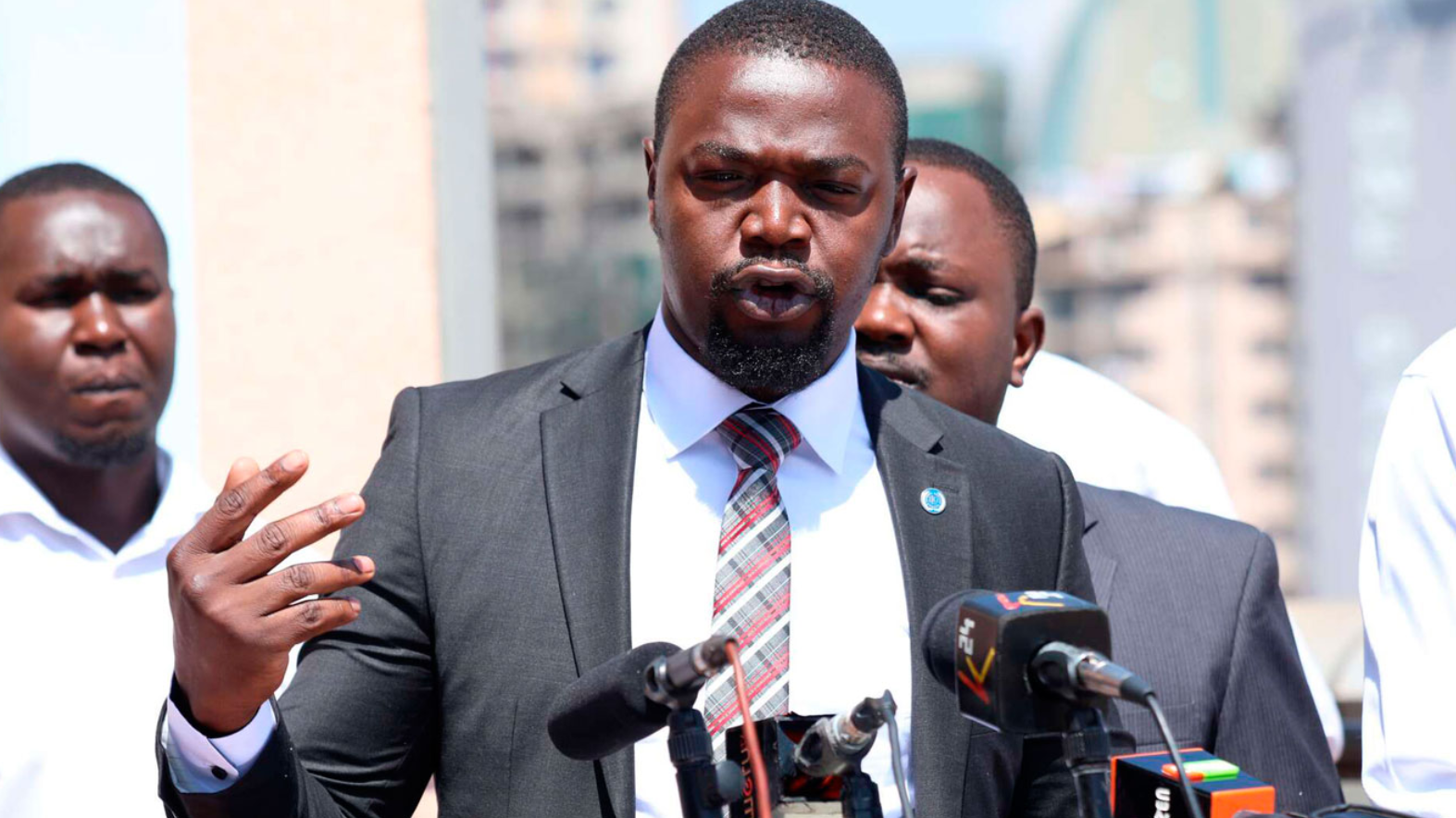
Kenyan doctors on strike have given the government their irreducible minimum condition before returning to work: employ the intern doctors at Sh206,000 a month.
Dr Davji Atellah, the Kenya Medical Practitioners, Pharmacists and Denstists Union (KMPDU) secretary-general, says the interns will not be paid anything less than what is contained in the Collective Bargaining Agreement of 2017.
Accepting anything less than Sh206,000 would be similar to turning the medics into slaves, he warned.
The government has offered to pay the interns Sh70,000 a month but the union says the CBA rate is “non-negotiable”.
Dr Atellah has decried negotiations with the government likening it to “milking a stone. It’s a tough assigment”.
The doctors have been on strike since March 14 demanding that intern doctors be hired; salary arrears be paid and hospitals be equipped.
“We can’t allow the government to reduce our salaries. There is no turning back; it is like crossing the Rubicon,” Dr Atellah said on Citizen TV and Ramogi Radio on April 24 morning.
“Lowering the salaries of interns is like adding salt to injury,” he said, reiterating the government would rather suspend meeting all other conditions the medics have listed but employ the interns. In 2015, the interns were paid Sh150,000 a month.
According to the government, Sh6.1 billion has been budgeted to honour what doctors are demanding but the unionist rubbished that as “mere talk” that politicians thrive on.
He challenged the authorities to set aside a part of that budget and immediately employ the interns on the 2017 CBA terms.
“It is the government that is on strike and a hardliner. Let them soften their stand or patients will continue to suffer,” Dr Atellah said in response to accusations that they failed to appear for signing of the Sh6.1 billion deal on April 23 at KICC in Nairobi.
Intern doctors are hired as medical officer II, according to the Public Service Commission terms of employment. They are promoted to become medical officer I and eventually senior medical officers.
Also Read: Will Murkomen make Kenyan roads safe for school children?
The interns are qualified doctors who patients meet most of the time they visit hospital and “some of them even conduct surgery,” said the unionist.
According to the WHO standards, the doctor-patient ratio is 1:1,000 but in Kenya it is 1:1,700, which has pushed the working workers from the recommended 40 hours weekly to more than 100 hours, the unionist said.
Kenyans are increasingly beseeching the medical workers to return to work since a majority depend on public facilities for emergencies, routine check-ups, deliveries, and specialised treatment.
However, Dr Atellah said doctors were reluctant to return to work on endless promises that will not be honoured, forcing them to boycott work again in the next six months.
Without setting aside adequate budget to respond to the doctors’ demands, he said, the lofty talk about Universal Health Coverage (UHC) plan will not be realised.
“These people are politicians who are just talking, but they don’t mean what they say. This strike is for people to get service and the public hospitals to be functional.”
Already the government is working on a revamped public medical insurance that will be funded by taxpayers by contributing 2.75 percent of gross pay from July, according to the draft plan.
The KMPDU has allowed about 10 percent of doctors to be at work and respond to emergencies.
Meanwhile, Dr Atellah has claimed that of the five foreign doctors that Kenyatta University hospital sought to hire to fill the gap left by the striking medics only one passed the peer review test by the Kenya Medical Practitioners and Dentists Council, the State agency that regulates the profession.
editor@aplain.com


