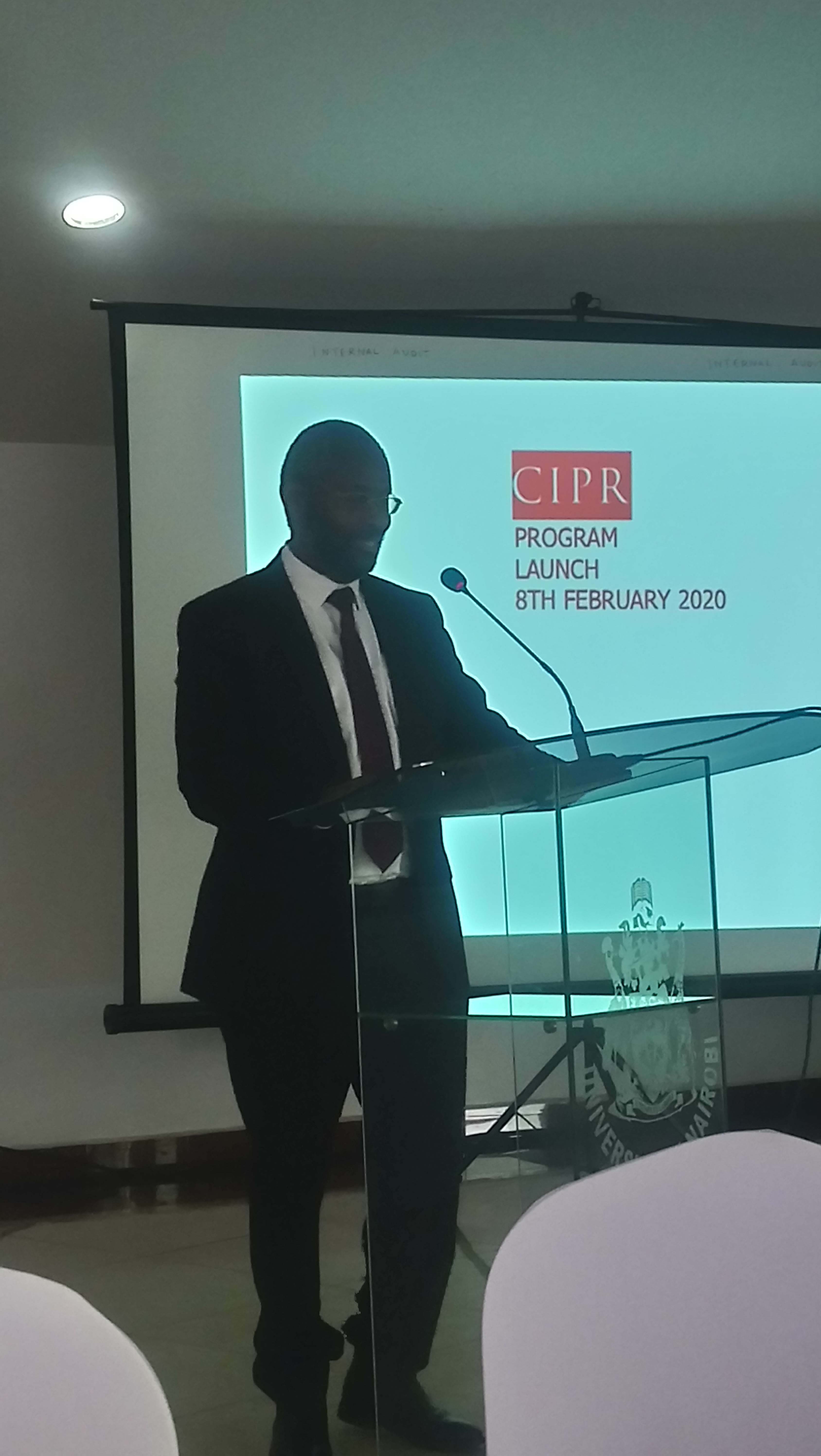
The University of Nairobi has appealed to the government to increase research budget if the institutions were to have impact and meet global standards.
Prof Stephen Kiama (pictured), who has just been installed as the UoN vice-chancellor, has reiterated that research impact determines ranking.
Responding to reader questions in the Sunday Nation, Prof Kiama said “research with impact” is “a critical factor in the performance of a university.”
A veterinary surgeon, Prof Kiama has been at the university of Nairobi for more than three decades and is a respected fundraiser, a strength he is expected to use in lifting Kenya’s leading university to research stardom.
He asked the government to “implement the provision of two percent of the national budget to finance research in our universities.” Unesco estimates that Kenya’s research and development budget stands at 0.8 percent of the Gross Domestic Product (GDP), which is a huge figure in absolute terms.
In a recent university ranking, UK universities were found to lag due to a number of factors, key among them poor teaching and dropping research impact, the QS World University Ranking said.
For many years, Kenyan universities have been struggling financially as the government reduced funding, leaving the learning institutions with the headache of delivering smooth operations. This is how they grew student population and overwhelmed resources.
Kenya has an average budget of Sh3 trillion ($30 million); in the next financial year it will bet at Sh2.7 trillion. The country’s GDP is estimated at Sh10 trillion.
Apart from delaying salaries, Kenyan universities have failed to remit statutory deductions for pensions, taxes, social protection funds, the public insurance and others like sacco contributions.
Under the cloud of debt, some of the universities are technically insolvent, forcing them to live from hand to mouth while pushing to the back burner elaborate plans like sieving research ideas to make life better.
Although the UoN has performed relatively better in global and Africa university rankings, its researches have only become a trickle, made worse by poor publicity to help the public know what is happening.
Research at Kenyan universities have slipped from bad to worse what with the brain drain that started in the 90s when muzzling by the State and poor pay pushed top dons to look for greener pastures.
To make ends meet, Kenyan universities gluttonously launched the commercial learning, known as parallel or Module II that gave them the much needed financial muscle but took away the shine when student numbers went up.
Popular programmes like the MBA attracted an inordinate number of students, especially among the working class, who used the higher degrees to bargain for better pay and promotions or new jobs.
aplainteam@gmail.com