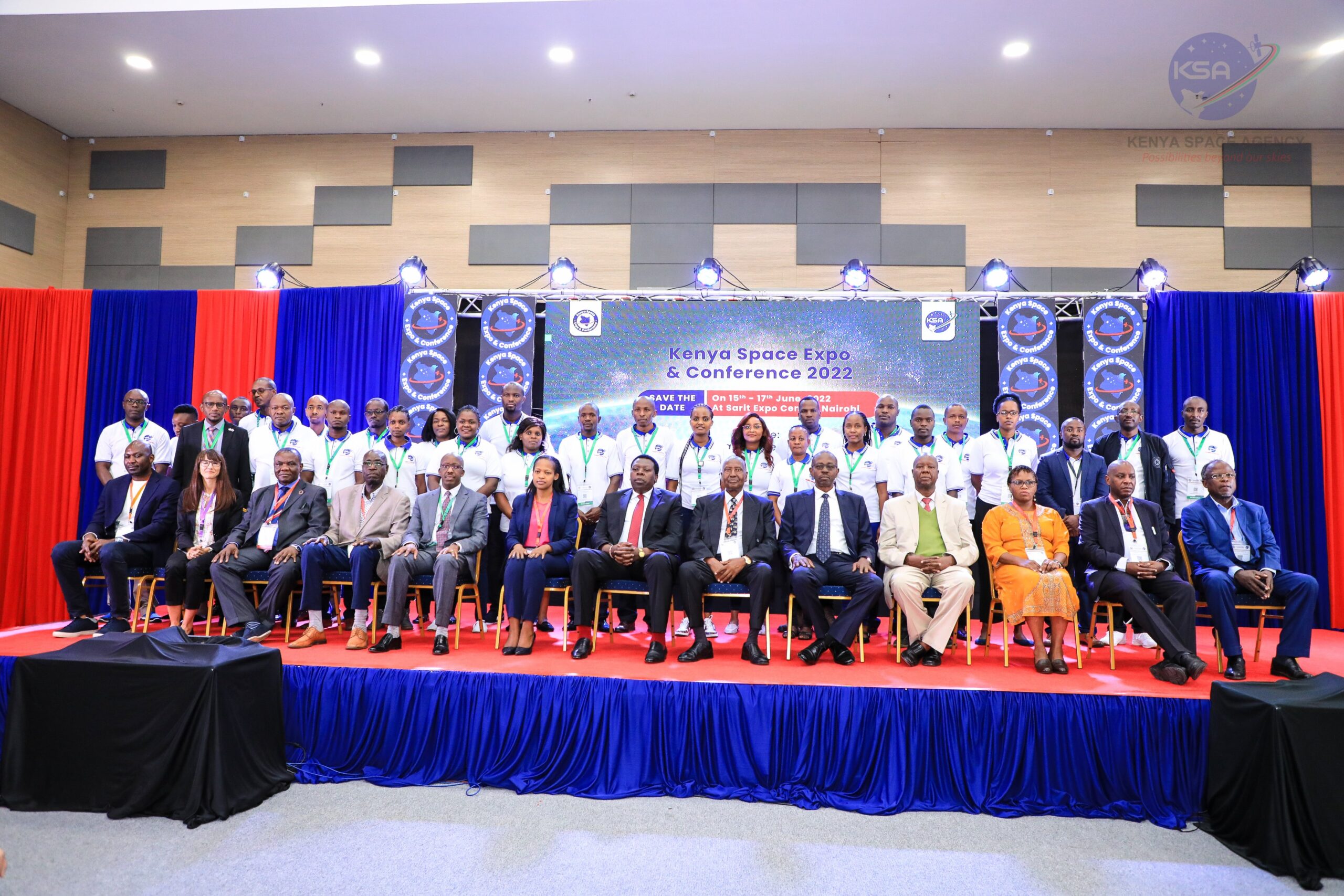
Kenya’s second edition of the Kenya Space and E Conference took place in Nairobi for three days and ended on June 20 with more than 400 delegates from across the world attending. A Plain talked with the Kenya Space Agency (KSA) on a number of subjects. Here are the excerpts:
How many space scientists in Kenya?
Space is multidisciplinary and can be broadly categorised as follows: Sciences (Physics/Astronomy & Astrophysics, Biology, Geography, and Medicine); Technology (Geomatic & Geospatial, Computer Science/ICT); Engineering (Electrical & Electronic, Mechanical, Mechatronics, Aeronautical, and Aerospace); and, Arts (Law, Commerce, Communication, and Insurance).
The approximate number of specialists in the space sector with advanced qualifications can be categorised as: Aerospace Medicine 2; Space Lawyers 20; Space Systems Engineers 100; Ground Station Engineers/Technologists 200; Physicists (Astronomy, Astrophysicists) 500; and, Remote Sensing & Geospatial Experts 2,000.
Which countries lead in space studies in the world?
Different countries adopt different training models depending on the level of technological advancement, industry involvement and know-how and technology transfer programmes.
- Americas (USA, Canada, Brazil, Argentina)
- Europe (United Kingdom, France, Italy, Germany, Netherlands, Russia, Ukraine, Czechia, Spain, Portugal)
- Asia (Japan, China, India, Singapore, South Korea)
- Africa (South Africa, Egypt, Algeria, Nigeria, Kenya, Ethiopia)
What are the opportunities for space experts?
The nascent space sector in Kenya is still growing and mainly offers opportunities in the downstream segment as opposed to the upstream that is capital-intensive.
Upstream segment includes research, space manufacturing and ground systems (fundamental and applied research activities, scientific and engineering support activities, material and components supply, manufacturing of space systems, subsystems and equipment, telemetry, tracking and command stations).
Downstream segment covers space operations for terrestrial use, and products and services which rely on satellite technology, signal, data to function, for example, satellite broadcasting, selected GIS, GNSS-enabled devices.
Space-related segment finally includes space applications, products and services from spin-offs or technology transfer from the space sector, which use satellite technology but do not depend on it.
What are the details of the 15 PhD scholarships Italy has offered Kenya?
The PhDs are on earth observation related areas of application, thus require qualifications on disciplines such as geospatial engineering, traditional engineering disciplines, surveyors, computer scientists… The PhDs will be for three years. The KSA has invited relevant key government agencies using geospatial data to benefit from this opportunity.
editor@aplain.co.ke