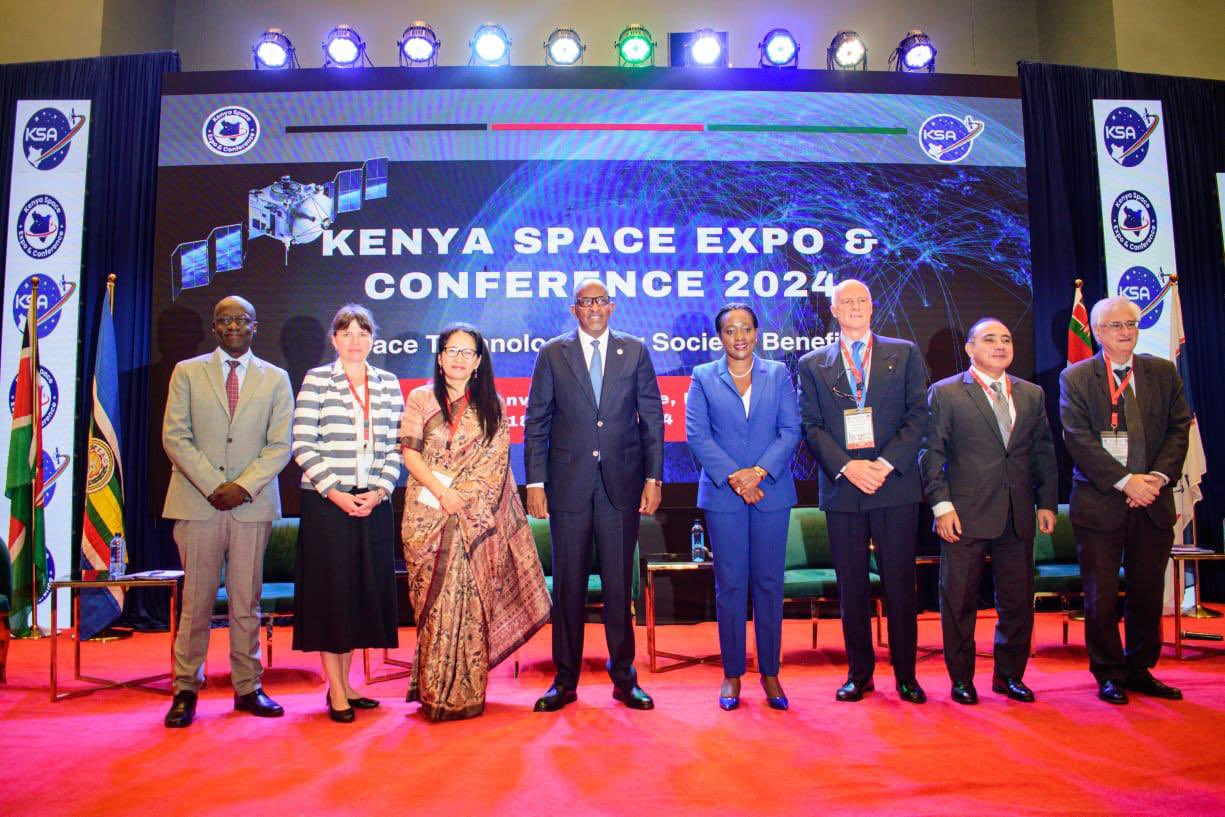
Kenya has been challenged to come up with specific policies aimed at increasing the number of women in the space profession.
During a three-day Kenya Space Expo and Conference that ended in June 20 in Nairobi, delegates asked the government to start by breaking barriers blocking women from this profession and promote science, technology, engineering and mathematics (STEM) studies from the early school days.
This, they said, could pave the way for them to choose studies in the space discipline.
According to the United Nations Office of Outer Space Affairs (UNOOSA), women constitute between 20 and 22 percent of professionals in the space industry across the globe. The agency made the announcement at the event where Kenya announced securing 15 PhD scholarships that the Italian government will fund.
The Kenya Space Agency (KSA) announced that Kenya will host a Space4Women Global Expert meeting alongside UNOOSA in November.
The agency called for a wider participation of women and girls in the advancement, use, and development of space science, technologies, and applications.
During the event in Nairobi, Kenya’s Prime Cabinet Secretary, Musalia Mudavadi, said space capabilities “will constitute a larger part of the global economy by 2035” when, according to McKInsey, the space economy will hit $1.8 trillion from more than $600 million today.
Mr Mudavadi said Kenya “cannot afford to be left behind in this favourable future outlook for the global space economy” and the government was committing to “invest the necessary resources in order to recoup on the returns on investment”.
Space technologies and applications support communications, digital economy, transportation, blue economy, agriculture, energy, and all forms of infrastructure.
Space knowledge also enhances environmental monitoring, facilitates mitigation of various threats to human security, natural disasters, extreme weather events, famine and drought.
Across the world, there has been a sustained push to have more women take up STEM subjects with cultural barriers and perception blocking them from choosing sciences and engineering courses at university.
By 2023, it was estimated that women occupied a paltry 28 percent of STEM workforce globally. However, at 47 percent, African universities had the biggest percentage of women graduates in the science and engineering disciplines across the world.
editor@aplain.co.ke