When plagues like the novel coronavirus hit the world, the masses look for believable alternatives and solutions from the government, the Church and education.
The government’s take is usually what the regime in leadership believes about that particular attack. Apart from the beliefs, the subjects will be keen on stimulus packages or donations to keep the economy afloat and save the masses from annihilation.
As infallible as God is, some people believe religion is a hindrance to hearing from the Higher Power.
Even if the government asks people to pray, like Kenya did recently to keep the pandemic at bay, the led will be waiting for what education (read the experts) is saying. It is the educated who silently have the unshakable following because their positions are science-based.
Some have shrugged off prayer suggestions as futile attempts by people who don’t understand the weight of the virus.
Among the religious, however, turning to God is the game-changer. In one of his books, US pastor Vincent Norman Peale says faith power delivers wonders, probably tying his argument to God’s promise to humanity that He delivers beyond the imaginable.
So, what is the role of the educated and experts when the society finds itself in such sticky ruts as the one brought forth by Covid-19?
In Kenya, when a prominent politician died of cancer in 2019, one of the memorable speeches was that of a fellow politician — coincidentally a cancer survivor — who asked the government to invest in training cancer experts instead of endless rows, columns, and corners of brick and mortar.
Prof Anyang’ Nyong’o praised the expertise at the Helen Diller Cancer Centre in the US, where he was admitted to. There are specialists in different types of cancer, he said.
Prof Nyong’o, a former Health minister in Kenya, said there are many ”untruths” about cancer that ought to be confronted with research and scholarship ”so that we deal with the real thing,” he told President Uhuru Kenyatta to an applause at the burial of Joyce Laboso, who was the governor of Bomet County, one of the 47 regional governments in Kenya.
Every now and then, the world comes face to face with challenges, including disease, crime, hunger and beliefs that give people sleepless nights.
Such occasions push states, countries, regions, and the world to the edges, but they always trust word from the educated.
There will be rescue budgets and waivers to support more research and to employ more experts, indeed people on leave and retirees will be recalled to deliver the much needed back-up.
During the new coronavirus (Covid-19) outbreak, one of the spirit-lifting reports was that of an Iranian doctor who served to Corona patients while on drip herself. She died of the disease, revealing a rare commitment.
Indeed, as governments periodically address the masses, presidents and ministers or cabinet secretaries are accompanied by the experts.
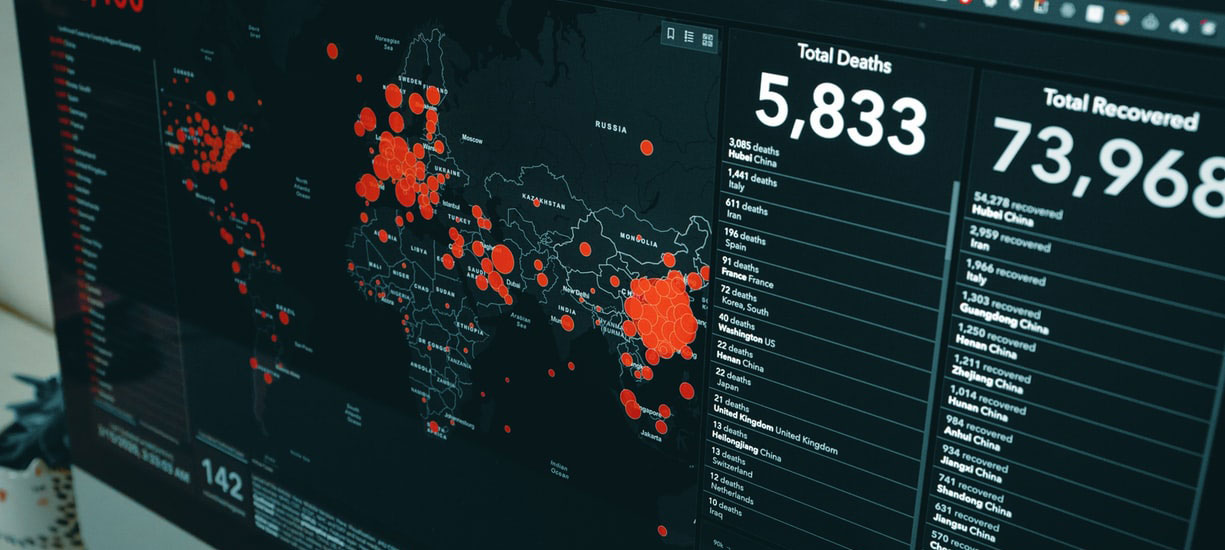
For the Covid-19 pandemic that has killed tens of thousands across the world, infectious disease experts have been the go-to people for an assurance.
President Donald Trump has appeared in press briefings with special teams, among them Anthony Fauci, the director of the Institute for Allergy and Infectious Diseases.
In Kenya, infectious disease experts have volunteered information through the media. This is what is expected of them, revealing what is being done, where to get help, and other data.
It is the role of experts in different disciplines to educate the world, not just when the plagues come, but always, such that the frequency of similar attacks reduces.
For example, the late Wangari Maathai warned the world that there is no peace when human beings destroy the environment. That nature is ruthless when it fights back. And, now there are fears that global warming could expose more people to diseases when habitats are distorted and limited food when climate change delivers miseries like limited yield.
Yes, there is anxiety about Covid-19 and almost everyone is starting to take washing of hands seriously, not touching water with the fingertips without using soap.
Going forward, it will be the role of the experts to keep reminding people that washing hands saves life. That washing hands has a formula and is a mark of good education.
For the more complex areas like research and scholarship, the educated are expected to continuously inform the world when by sustaining a stream of knowledge and releasing it for public good.
The educated ought to know what is required for public good and what passes for commercial pricing.
Indeed, studies come in different formats, including the general information and the nitty-gritty that is sold to individuals and institutions who require more meat for making decisions or starting other studies.
Apart from always reminding people about the consequences of pandemics, the world expects experts to take the search for better ways further.
To the educated, there is always something to add, to tweak, to adjust, to question, to tighten.
It goes without saying that what is being done to tame the coronavirus disease is only the tip of the iceberg. This is the new coronavirus. It is upon experts to ask themselves what the next strain is likely to be, guided by its history.
Shall there be a vaccine for Covid-19? For how long shall the authorities keep issuing curfew orders and threatening with lockdowns because of a pandemic? Curfews and lockdowns are possibilities, but are they unsustainable?
Of course, they are the alternatives if scientists take longer to get a vaccine.
Nothing can be as impractical as taking the current practices and responses as sufficient and satisfactory.
When plagues hit, humanity realises that even the best education is not good enough.
If humans were to survive, then education must always be questioned and adjusted to confidently confront the daily challenges and prepare for the worst plagues.
Education is not just about productivity, it is also about knowing and understanding one’s environment, and responding to it appropriately. In this case, the environment is the educator.
Of what good is it to build skyscrapers that no one will use because we keep misreading the environment, the warnings, the things requiring attention?
Imminent dangers cannot be taken for granted. Education ought to prepare its consumers for the right end.
Right education, in part an affair of community and culture, should be dynamic to create a flexible individual.
Stating the true purpose of education today is a frightful bore to a majority. But the coronavirus pandemic is trying to challenge this throbbing disdain.
Coronavirus will be stopped, ultimately, but the philosophical considerations about why the society needs education will continue to haunt man.
The pandemic has only opened the Pandora’s box. Hurriedly putting the lid back is not the answer. It should continue to force itself out, generation after generation, until man begins to dialogue, guided by reality.
As is the case now, new experiences yield new meanings that ought to speed up the search for the missing ingredient and include it in the curriculum.
Unprecedented things start as chaos, but deliver something as novel as this coronavirus that has come with quarantining, isolation, curfews, and economic pain.
It is at this point that education becomes handy; to unravel the novel like coronavirus. Peter Drucker once noted that unless the society commits itself to the education of the whole man, the greatest and most creative civilisations are in danger of destruction.